Hattiesburg: 601-450-5550
How Long Do Dental Implants Last? What to Expect After 10, 15, and 20 Years

How Long Do Dental Implants Last? What to Expect After 10, 15, and 20 Years
By Cronin Dentistry | August 20, 2026
If you have a dental implant that was placed years ago, reaching the 10-, 15-, or 20-year mark does not automatically mean it needs to be replaced. Patients in Hattiesburg, Columbia, and surrounding South Mississippi communities often wonder whether an older implant has an expiration date or whether problems can suddenly develop after years of feeling completely normal.
The short answer is reassuring: dental implants can remain functional for decades, and some can last much longer than 20 years. A 2026 systematic review of prospective studies found an estimated 20-year implant survival rate of 93%, although individual outcomes vary and long-term monitoring remains important.
What matters is not simply the implant’s age. Your gum health, supporting bone, oral hygiene, bite forces, smoking status, overall health, and the condition of the crown and other components all influence how well the restoration continues to function.
A dentist’s perspective on long-term implant care
Dr. Joe Cronin, DDS, received his Bachelor of Science in biology from Utah Valley University and graduated from the Virginia Commonwealth University School of Dentistry. He completed an Advanced Education in General Dentistry (AEGD) residency in Bessemer, AL, where he gained experience with dentoalveolar surgery, bone grafting, sinus grafting, implant dentistry, and IV sedation. He is a member of the American Dental Association, Academy of General Dentistry, and Mississippi Dental Association.

At our Hattiesburg dental office, Cronin Family Dentistry, our approach to implant care is centered on comprehensive evaluation, long-term maintenance, and clear communication. Our Hattiesburg and Columbia teams provide implant dentistry along with restorative and preventive care, allowing patients to have their implants evaluated as part of their overall oral health.
So, how long do dental implants last?
There is no single expiration date for a dental implant.
Research shows that implants can have high survival rates over the long term. A systematic review published in 2019 estimated approximately 96.4% implant-level survival at 10 years under its primary analysis.
More recent research specifically examining implants followed for at least 20 years found favorable long-term outcomes, with a 93% estimated 20-year survival rate in the included prospective studies.
That does not mean every implant will last 20 years, nor does it mean an implant that reaches 20 years is automatically nearing failure.
Think of 10, 15, and 20 years as milestones for evaluation rather than expiration dates.
What can change after 10 years?
Around the 10-year mark, an implant that feels normal may still be performing very well. However, this is also a point where regular professional monitoring becomes especially valuable.
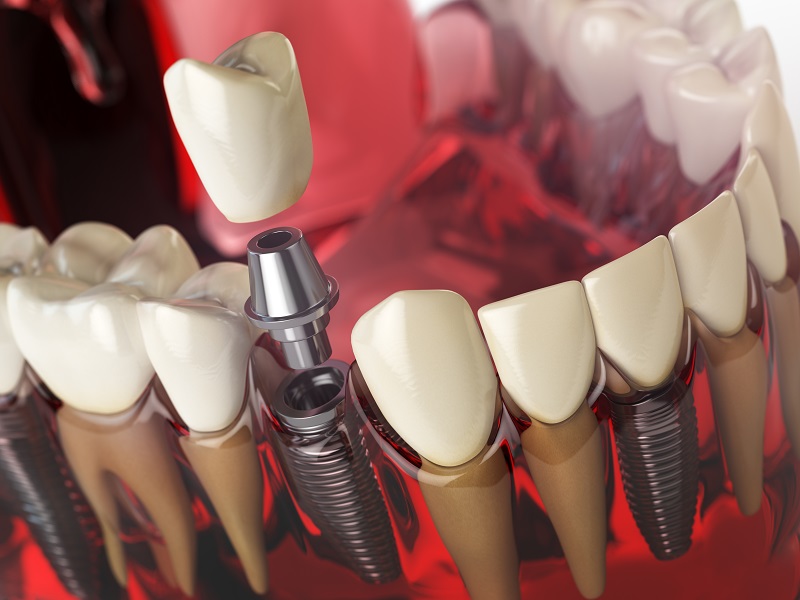
The titanium implant itself may remain stable while another part of the restoration develops a problem. For example, the crown attached to the implant can experience wear, fracture, chipping, or other complications even when the underlying implant remains integrated with the jawbone.
Long-term research on single-tooth implants has found high implant survival after 10 years, while original crowns had a lower survival rate, meaning some patients needed their crown replaced even though the implant itself remained functional.
That distinction is important because patients sometimes hear “my implant needs work” and assume the entire implant must be removed. That is not necessarily the case.
What should you expect after 15 years?
At 15 years, the question becomes less about age and more about the condition of the implant and the tissues around it.
One of the biggest concerns is inflammation around the implant. Bacteria and plaque can accumulate around the gumline, just as they can around natural teeth. Early inflammation, known as peri-implant mucositis, can occur without bone loss. If inflammation progresses to peri-implantitis, the supporting bone can begin to deteriorate.
This is why dental implant lifespan is closely connected to maintenance.
A patient may say, “I’ve had this implant for 15 years and never had a problem,” which is encouraging. But feeling comfortable does not prove that everything underneath the gum is healthy. Professional examinations can identify changes before they become obvious to the patient.
What happens when an implant reaches 20 years?
A 20-year-old implant does not automatically need replacement.
In fact, current long-term evidence supports the possibility of continued function beyond two decades. A 2024 meta-analysis also found that long-term implant survival remained favorable, while emphasizing that follow-up should continue rather than stopping once an implant reaches 10 years.
At 20 years, your dentist may evaluate several things:
- Whether the implant remains stable
- The condition of the gum tissue around it
- Whether there has been supporting bone loss
- The fit and condition of the crown
- Signs of wear, fracture, or loosening
- Your bite and the forces placed on the implant
- Your oral hygiene and periodontal health
If those factors remain favorable, there may be no reason to replace a functioning implant simply because it is 20 years old.
The warning signs you should not ignore
Age alone is usually less concerning than a change in how an implant looks, feels, or functions.
Contact your dentist for an evaluation if you notice:
- A feeling that the implant or crown is loose
- Pain or tenderness around the implant
- Red, swollen, or bleeding gums
- Pus or drainage
- A change in the way your teeth come together
- A crown that has cracked, chipped, or become unstable
- Food repeatedly getting trapped around the implant
- Changes in the gumline around the implant
Bleeding around an implant is particularly easy to dismiss because patients may assume it is simply irritation from brushing or flossing. However, red, tender, or bleeding tissue can be a sign of peri-implant disease and deserves attention.
Why do some implants last longer than others?
There is no single factor that determines dental implant longevity.
Long-term outcomes are influenced by the health and quantity of supporting bone, the condition of the gums, plaque control, smoking, previous periodontal disease, bite forces, and other patient-specific factors.
One common mistake is treating an implant like a maintenance-free replacement tooth.
An implant cannot develop a cavity in the same way a natural tooth can, but the tissues surrounding it can still become diseased. Regular brushing, cleaning between the teeth, and professional examinations remain important throughout the life of the restoration. The American Academy of Periodontology specifically recommends ongoing oral hygiene and periodic follow-up for implant patients.
Another mistake is waiting for pain.
Implant-related problems do not always begin with significant discomfort. A patient may notice bleeding, swelling, a change in the crown, or slight looseness before experiencing substantial pain.
Does a 20-year-old implant need to be replaced?
Not necessarily.
If the implant is stable, the surrounding tissues are healthy, the supporting bone remains adequate, and the restoration is functioning properly, there may be no reason to replace it based on age alone.
Sometimes the part that needs attention is the crown rather than the implant itself. In other cases, inflammation or bone loss may require treatment before the situation progresses.
This is why an individualized evaluation is more useful than applying a fixed “20-year rule.”
How can you help an implant last as long as possible?
The goal is not simply to reach 10, 15, or 20 years. It is to keep the implant and surrounding tissues healthy for as long as possible. Consistent daily care and professional monitoring play an important role in protecting the tissues around an implant. Read our guide to caring for dental implants for more practical maintenance tips.
Continue brushing twice daily, clean carefully between your teeth and around the implant, attend recommended dental visits, and address bleeding or other changes rather than waiting for them to disappear.
If you smoke, have a history of gum disease, or have difficulty keeping an implant area clean, discuss those factors with your dentist. They can affect the long-term health of the tissues supporting the implant.
For patients with older restorations, routine monitoring can also catch crown wear, mechanical problems, or changes in the surrounding bone before they become more difficult or expensive to manage.
When an older implant deserves a closer look
A 10-, 15-, or 20-year-old implant is not automatically a problem. The more important question is whether the implant, restoration, gums, and supporting bone are healthy today.
At Cronin Family Dentistry, we can evaluate older implants in the context of your complete oral health and explain whether continued monitoring, restorative work, or additional treatment makes sense. Our Hattiesburg and Columbia offices serve patients throughout South Mississippi with comprehensive dental and implant care.
If your implant has started feeling different, bleeding around it, becoming loose, or causing discomfort, schedule an evaluation with Cronin Family Dentistry rather than waiting for the problem to become more noticeable.
We want patients to know that reaching 10, 15, or even 20 years with an implant is not a deadline for replacement. We assess the condition of the implant and the supporting tissues, listen to what the patient has noticed, and then determine what care, if any, is appropriate. With consistent maintenance and timely attention to changes, we can help protect your investment and support a healthy, functional smile for years to come.
Frequently Asked Questions
How long do dental implants last?
Dental implants can last for decades. Long-term studies show high survival rates at 10 and 20 years, but individual outcomes depend on oral hygiene, gum and bone health, bite forces, health factors, and ongoing maintenance.
Can a dental implant last more than 20 years?
Yes. Some implants remain functional beyond 20 years. Reaching the 20-year mark does not automatically mean the implant has reached the end of its useful life.
Do dental implants need to be replaced after 10 or 20 years?
No. Age alone does not determine whether an implant needs replacement. A dentist should evaluate the implant, surrounding bone and gums, crown, and other components before recommending treatment.
What are the early warning signs of a failing dental implant?
Bleeding or swollen gums, tenderness, drainage, increasing discomfort, looseness, changes in your bite, or a damaged crown can indicate that an implant needs evaluation. Some implant problems may initially produce few noticeable symptoms.
Can the crown fail while the dental implant is still healthy?
Yes. The crown and implant are separate components, and the crown can develop wear or other complications while the implant remains stable. Long-term studies of single implants have reported higher survival for the implant than for the original crown restoration.
What happens if a 20-year-old implant becomes loose?
A loose implant or restoration should be evaluated promptly. The dentist needs to determine whether the looseness involves the crown, abutment, or implant itself and whether there are signs of bone loss or inflammation.
Does bleeding around a dental implant mean it is failing?
Not necessarily, but it should not be ignored. Bleeding can be associated with inflammation around the implant. Early peri-implant mucositis may be reversible, while progression to peri-implantitis can involve supporting bone loss.
How can I extend the life of my dental implant?
Good daily oral hygiene, regular professional examinations, managing gum disease, avoiding smoking, and addressing changes early can help protect the tissues surrounding an implant and support long-term function.